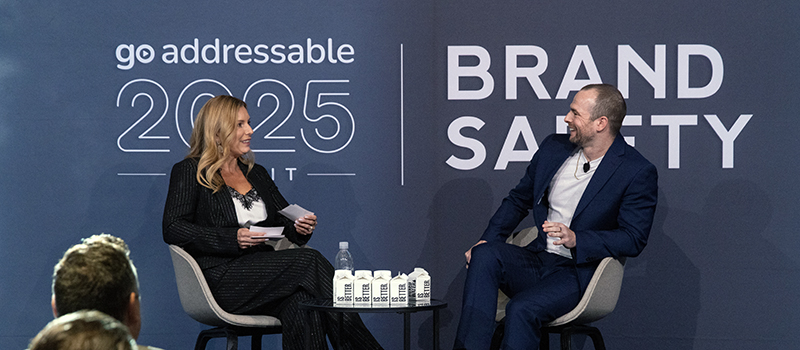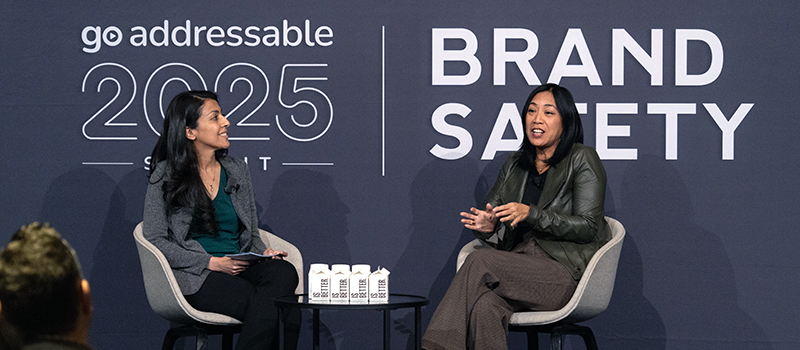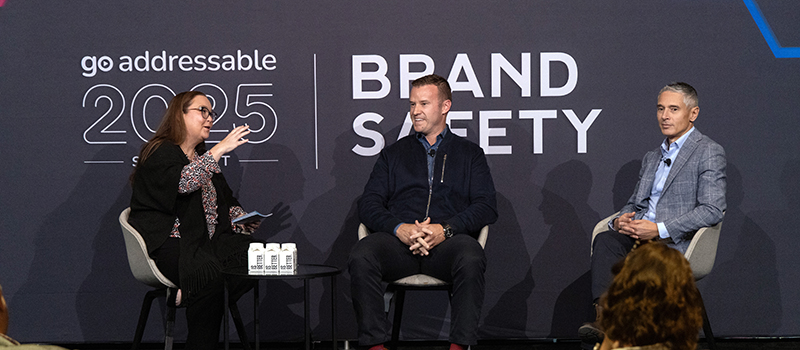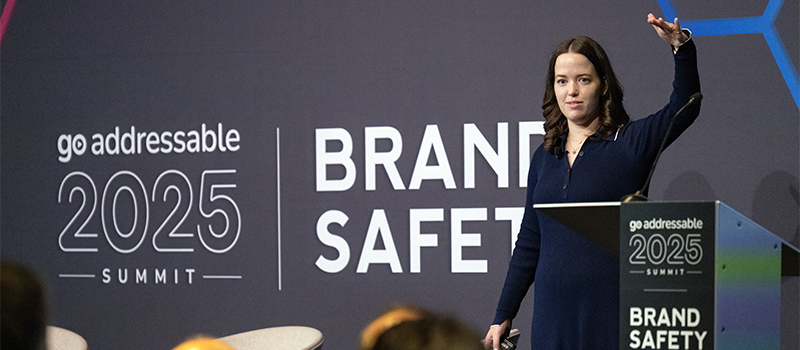
It was a packed house at the third annual Go Addressable 2026 TV Upfronts Brunch in New York, exploring how addressable TV advertising, its use of deterministic identity, AI and outcomes are redefining the modern media landscape. With 78% of advertisers now saying addressable TV will factor into their 2026-2027 Upfront negotiations, the industry has moved well past the question of whether addressable belongs at the table. The question now is how fast everyone can get there. Coming at the close of an intense week of Upfront presentations, the conversations on stage reinforced that deterministic, audience-based buying at scale is the most powerful and accountable way to reach consumers on television today.
Several major milestones and announcements were highlighted at the event, each reinforcing addressable TV’s accelerating momentum:
- Five New Supporting Members: Go Addressable officially welcomed DoubleVerify, Mastercard, OpenAP, Philo, and Veeva Crossix to its growing roster, bringing new capabilities in verification, transaction-level attribution, cross-publisher audience definition, and streaming inventory to the industry trade organization.
- New Advertiser Perceptions Research: Fresh data revealed that 78% of advertisers expect addressable TV to play a role in their 2026-2027 Upfront negotiations, up significantly from 67% last year. Among those buyers, nearly 30% rate addressable TV as “very important” to their plans (a 26% year-over-year increase), and 75% say it will be more important to their negotiations than it was last year. For the full report, download here.
- Launch of “Addressable Master” Course: Building on the success of the Addressable Essentials certification, which has seen over 1,000 media professionals complete the first module, Go Addressable launched its second module, Addressable Master, on Substack (goaddressable.substack.com) to provide deep-dive training on cross-platform planning, execution, and advanced measurement.
- “Next In Media” Podcast Partnership: A new five-part podcast series hosted by Mike Shields was announced, featuring conversations with top industry executives to elevate the broader dialogue around addressable TV and deterministic data.
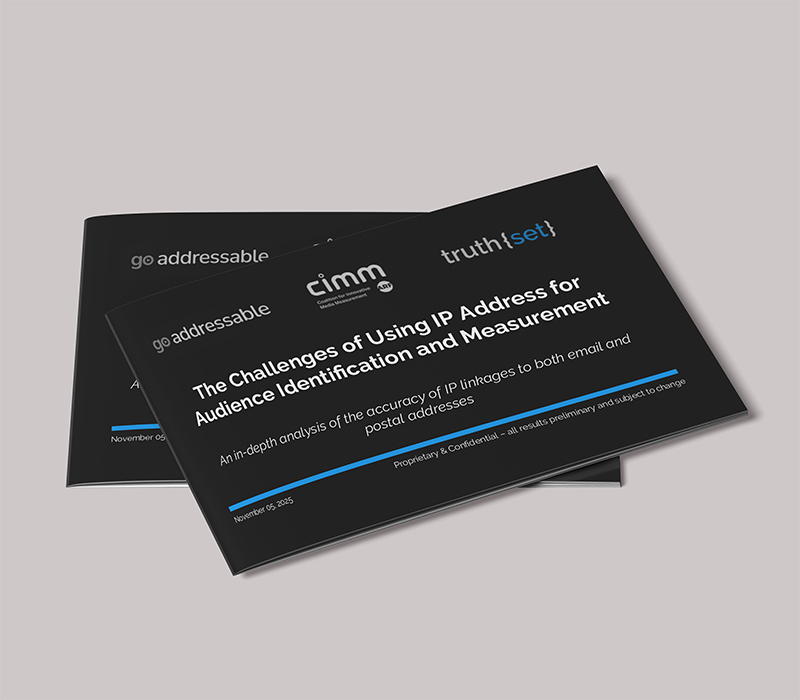
- IP Targeting Accuracy Warning: The group reinforced alarming research from Go Addressable’s commissioned CIMM x Truthset IP-to-Household Accuracy Study showing that IP-to-postal linkages are accurate only 13% of the time, and IP-to-email linkages just 16% of the time, making a compelling case for why advertisers must prioritize authenticated, deterministic first-party data over probabilistic alternatives.
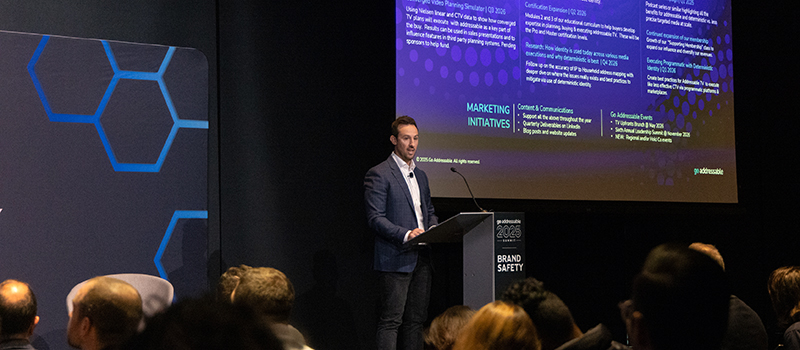
Opening the event, Go Addressable 2026 Board Chair Stephen Jutras welcomed attendees and set the stage for the day. He noted that the organization’s unduplicated household footprint now spans approximately 70 million households, providing massive scale accessible through the “easy button” National Addressable Counts initiative. “We are staying true to our three strategic pillars: simplify, socialize, and scale,” Jutras said, pointing to the rapid adoption of Go Addressable’s educational programs as a key driver of industry progress.
Here is a breakdown of this year’s program:
Keynote: Converged TV’s Edge: Deterministic Identity & Agentic Measurement
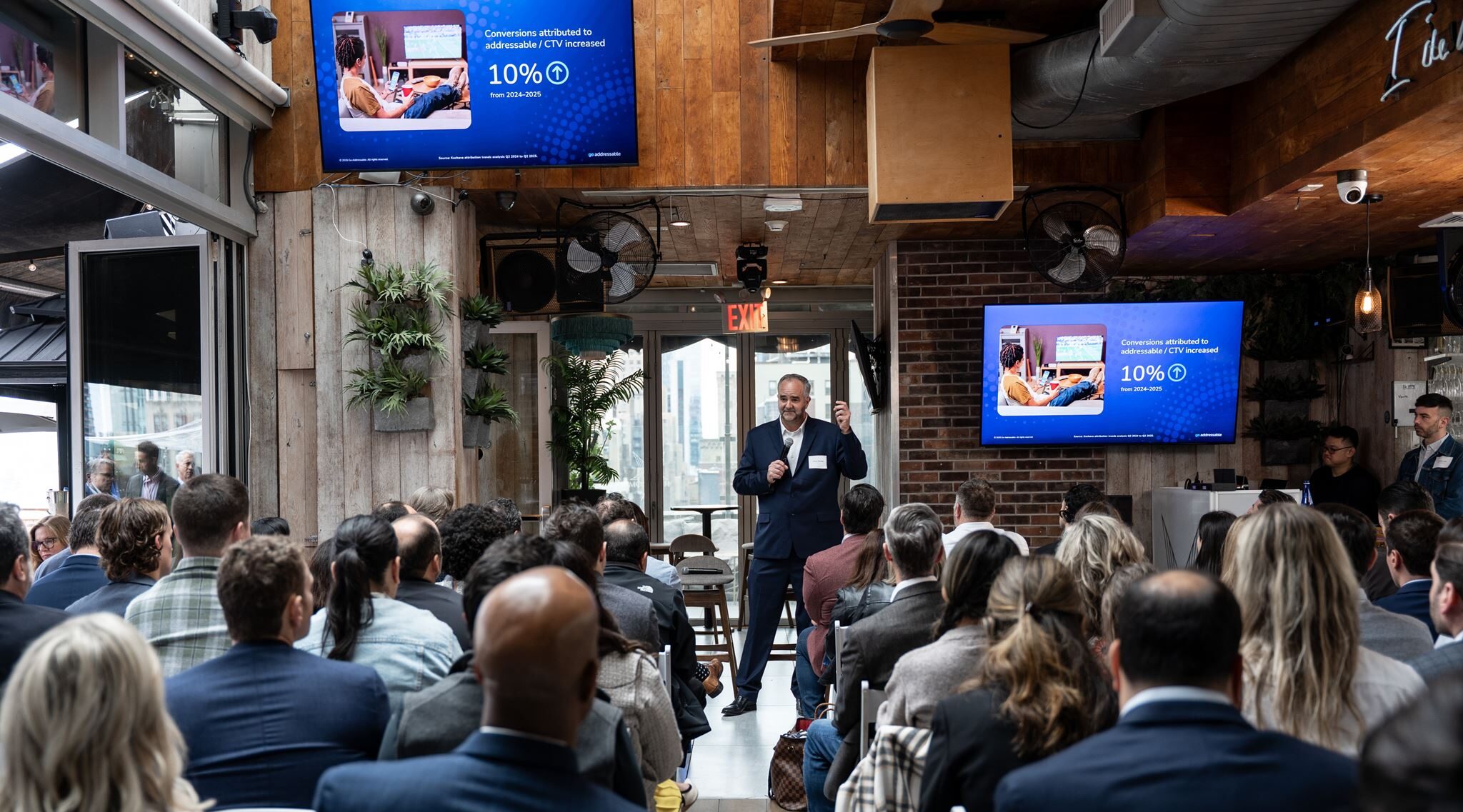
Speaker: Charles Manning, CEO / President, Kochava
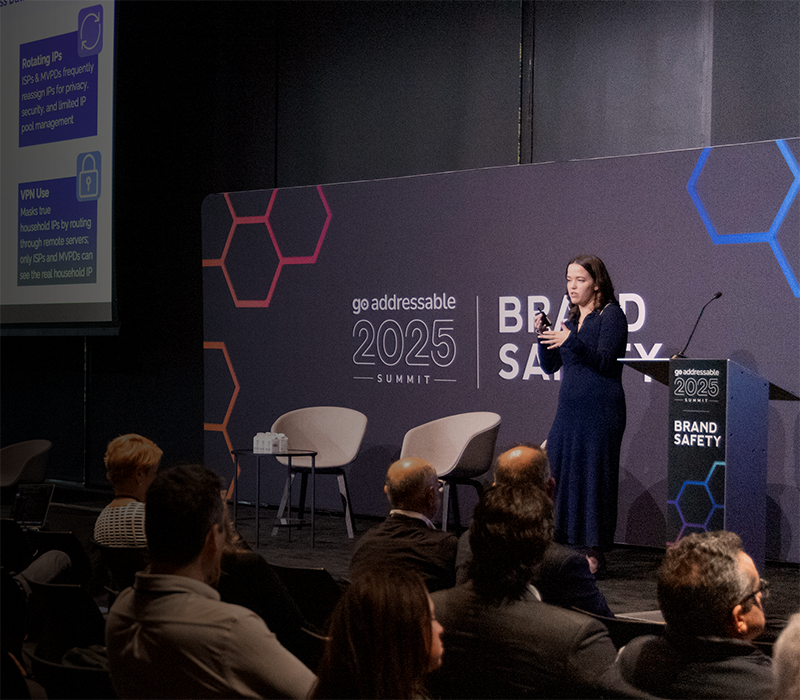
Kochava CEO / President Charles Manning delivered a keynote focused on the role of data quality in modern television advertising. His central argument was straightforward: automation only amplifies whatever data it is built on. Bad data at speed means bad decisions at scale. Good, deterministic data at speed means a competitive advantage.
Manning challenged the industry to stop conflating reach and frequency with real outcomes. Brands want app downloads, website visits, insurance quote completions, retail footfall, and incremental sales lift. Those are outcomes. Everything else is a proxy. He shared that general market advertisers, including quick-service restaurants and retailers, are increasingly buying premium TV home screen spots specifically because they want to drive direct consumer loyalty and bypass high-margin delivery intermediaries.
“We are at a precipice moment in the appreciation of durable identity,” Manning stated. “TV pitches and mobile catches. The exposure happens in the living room, but the action happens on the mobile device. Measuring that connection accurately is the secret weapon for modern brands.”
He also issued a pointed warning about the fragility of probabilistic data, noting that IP-to-postal linkages are accurate only 13% of the time. For advertisers who have been relying on IP-based targeting, that number should be a wake-up call. Authenticated, deterministic identity is not a premium option. It is the baseline requirement for any campaign that is expected to perform.
Key Takeaway
Deterministic identity is foundational to effective addressable TV. As the industry moves toward outcome-based accountability, the quality of the data underneath every buy will determine who wins and who wastes budget.
Making Advanced TV Easier: Using Agentic Media Buying to Unlock Addressable at Scale
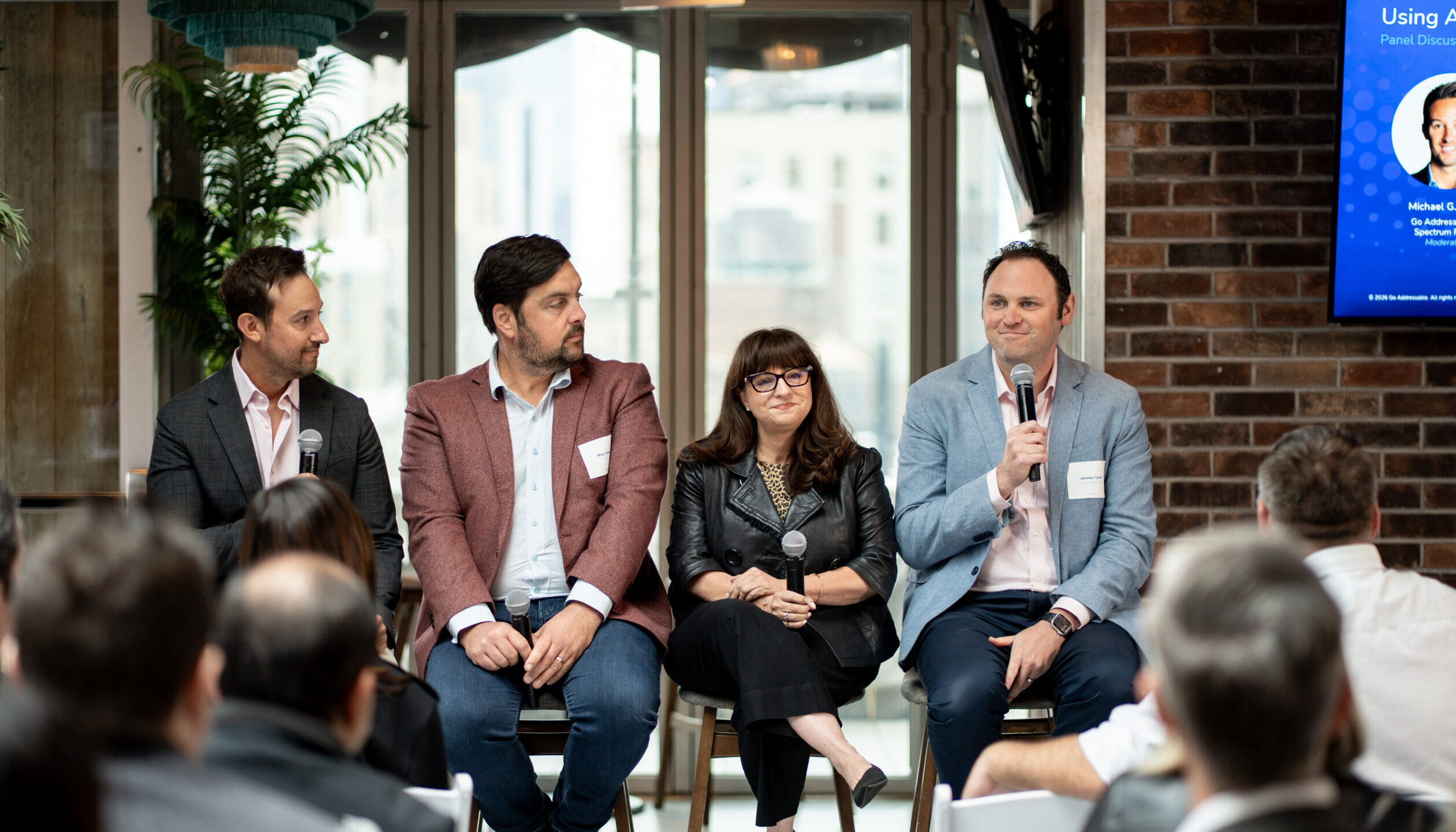
Speakers: Michael Kuntz, Spectrum Reach (moderator); Mike Treon, PMG; April Weeks, Basis; Jeremy Flynn, Horizon Media
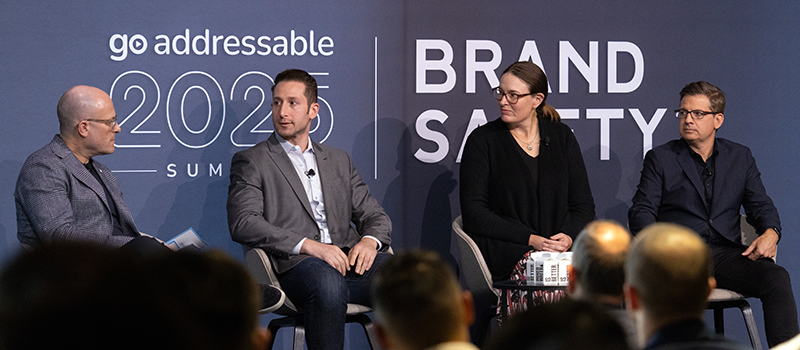
The day’s first panel explored how agencies and technology platforms are approaching automation in the context of advanced television. April Weeks, Chief Investment and Media Officer for Basis, discussed the recent beta launch of “Compass” within the Basis platform. She described the goal as connecting audience selection, data onboarding, activation, measurement, and billing reconciliation in one unified system. “Without that unified workflow and data, automation is only going to optimize and learn what it sees,” Weeks said. “If it stays in a fragmented situation, you are not getting the full benefit.”
Mike Treon discussed how PMG is building toward this through “Ally Labs,” a framework that allows teams to safely build and share curated applications to solve specific client challenges. Jeremy Flynn, Head of Product at Horizon Media, shared how this is being integrated into Horizon’s “Blue Platform” to guide investment decisions. “If I have a thousand people in my investment department and I can create an experience where they log in and immediately understand where their next best dollar should be spent, that completely changes the game,” Flynn said.
The panelists agreed that smarter tooling will not replace buyers but will free them from manual execution to focus on higher-level strategy. Mike Treon noted that the industry has moved from asking what we can do with these tools to asking what we should do, and that transparency into how optimization decisions are made will be critical to building trust across agencies, clients, and publishers alike.
Key Takeaway
Agencies are building unified workflows to make addressable TV easier to plan, activate, and measure. The common thread across all three panelists was that better data leads to better decisions, and addressable TV’s deterministic foundation is what makes that possible.
Buying for Time: How Agencies Are Rewiring TV for a Converged Video World
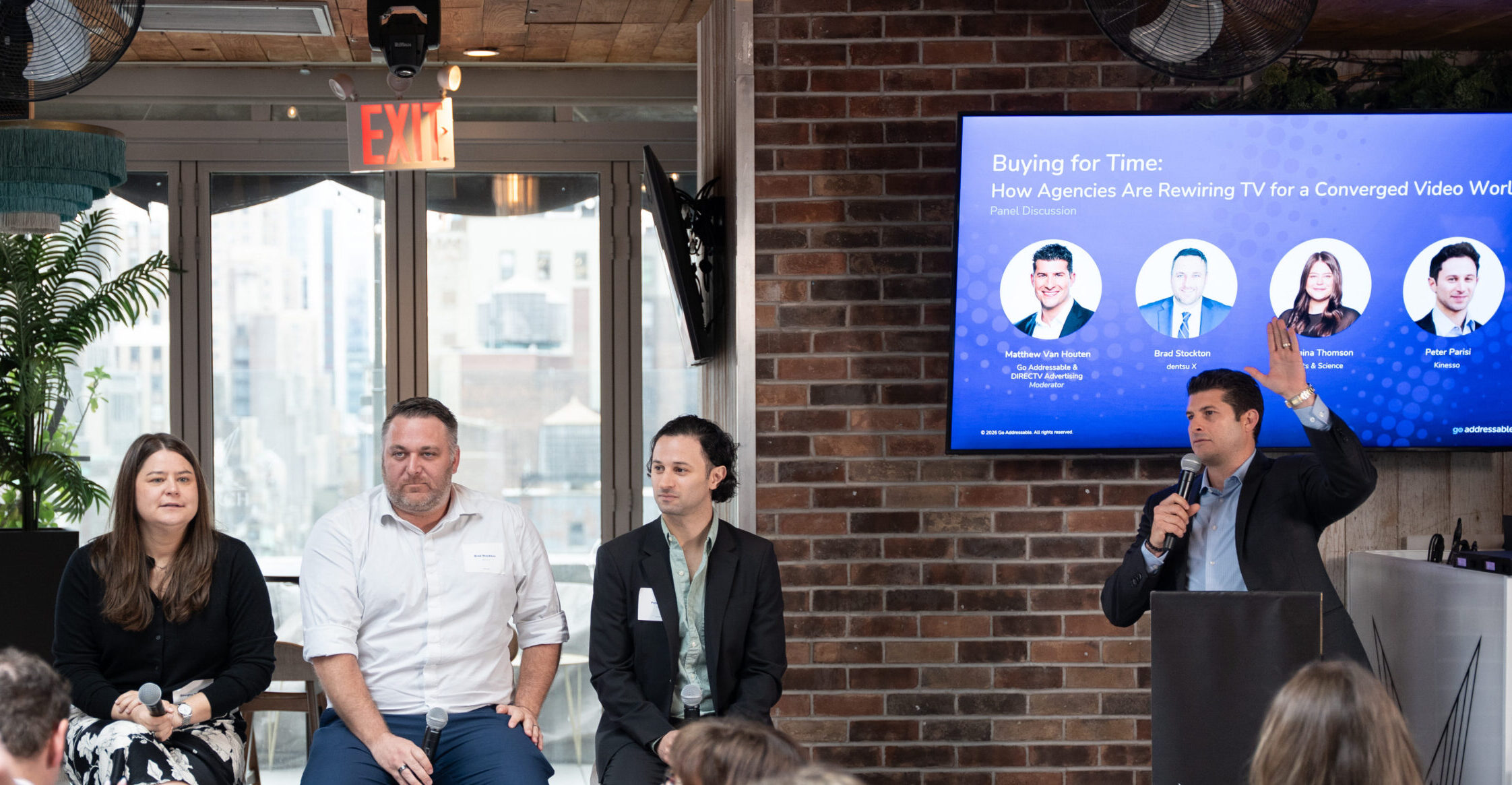
Speakers: Georgina Thomson, Hearts & Science; Brad Stockton, dentsu X; Peter Parisi, Kinesso; Matthew Van Houten, DIRECTV Advertising (moderator).
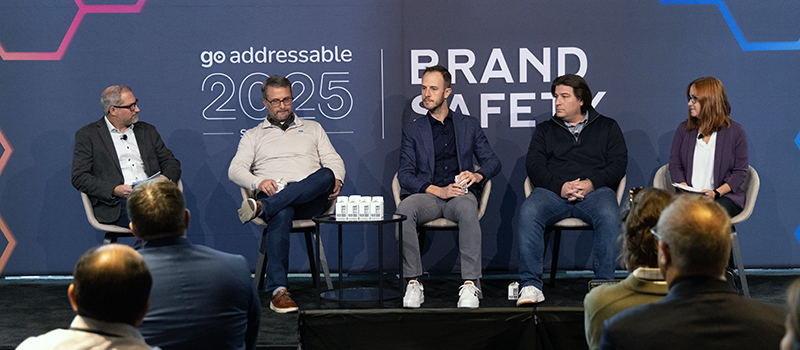
As viewership continues to fragment across linear, streaming, and video-on-demand, agency investment leads discussed how they are structurally reorganizing their teams and budgets to follow the consumer. Georgina Thomson, Chief Investment Officer at Hearts & Science, put it simply: “As consumers, we don’t sit on the couch at night and say, ‘I’m going to watch linear tonight and maybe CTV tomorrow.’ We must approach media planning from an audience-first lens and deliver brand messaging across all the screens they are watching on.”
Brad Stockton, who leads investment at dentsu X, called out one of the industry’s most persistent myths. “It is not expensive; it is effective,” Stockton said of addressable TV. “We need to move the conversation to focus on what we are trying to achieve.” Georgina Thomson agreed, adding that when measurement becomes your north star, it becomes much easier to move past face-value CPMs. “When you have a cross-screen, audience-first, addressable approach, you can understand if you are actually driving true incremental reach of the audience you want to get in front of,” she said. “All of a sudden you have a new metric you can optimize toward and tie it to the rest of the funnel.”
Peter Parisi, who oversees TV and streaming planning and activation at Kinesso, noted that launching addressable campaigns is no longer the complicated, clunky process it once was. However, he and Thomson called on network partners to provide greater data consistency and flexibility, particularly by sharing show-level data in programmatic bid streams to help buyers understand what content is truly driving performance. “Data consistency is huge,” Thomson said. “As buyers, we need that consistency across all partners so that we are able to measure it apples to apples.”
Key Takeaway
Rewiring TV for a converged world means moving past cheap CPMs and siloed channel planning. Audience-first strategies that prioritize data interoperability and proven business outcomes are the new standard, and addressable TV is the connective tissue that makes it possible.
Fireside Chat: How Addressable TV Helps Media Companies Battle ‘Operational Friction’
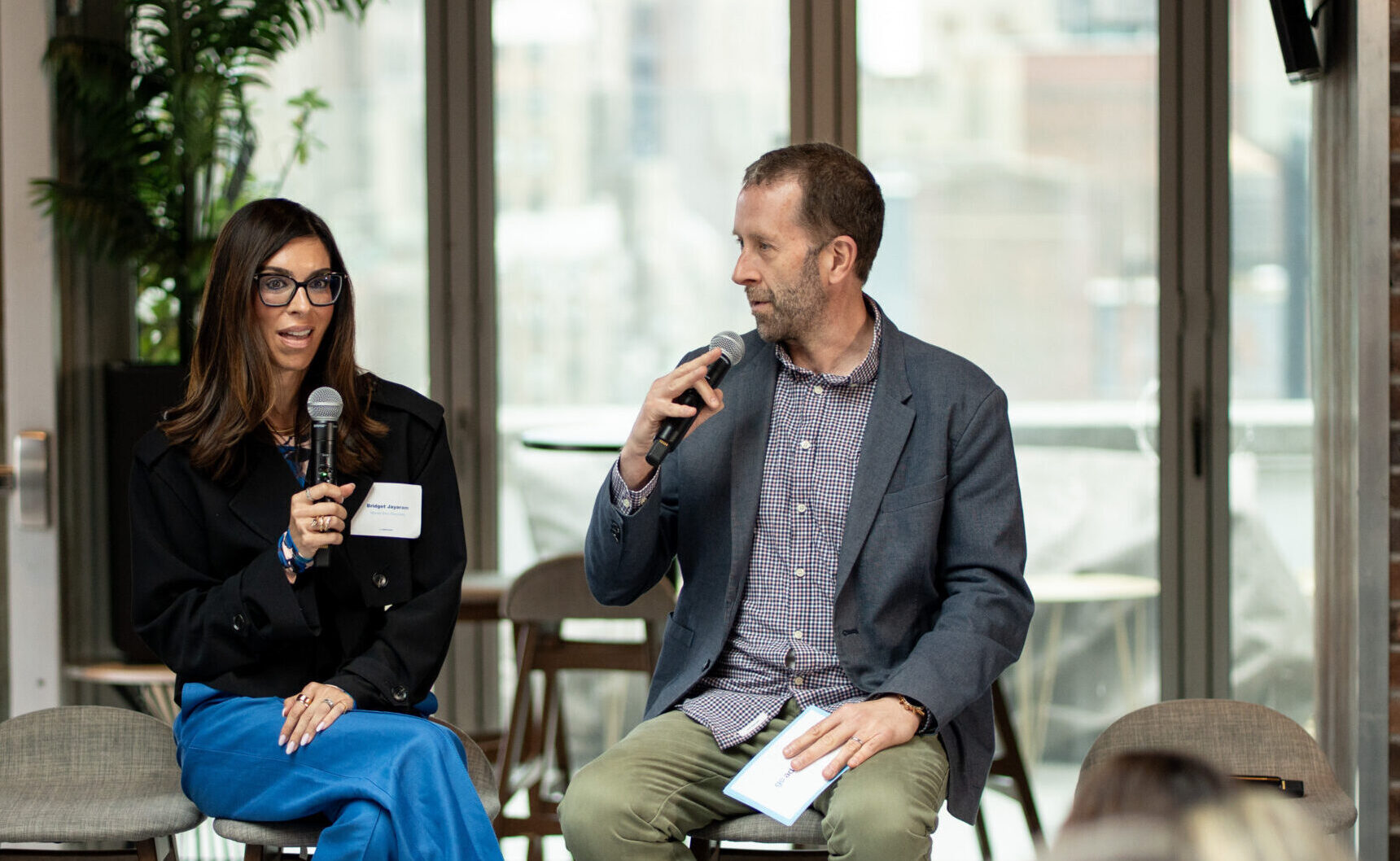
Speakers: Bridget Jayaram, Warner Bros. Discovery and Mike Shields, Next In Media (moderator)
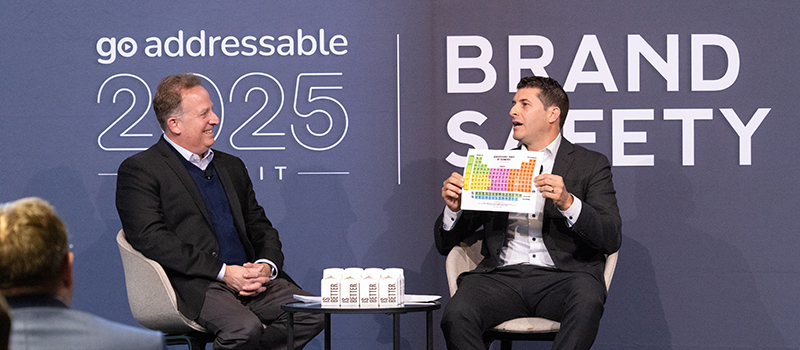
In an engaging fireside chat, Mike Shields sat down with Bridget Jayaram, who leads advanced advertising and programmatic sales at Warner Bros. Discovery (WBD), to trace the evolution of addressable TV over the past decade. Jayaram candidly reflected on WBD’s journey, admitting that when national addressable TV was first launched, the company focused too heavily on scale and household footprint size rather than solving the operational friction of the buying process. “The unique selling propositions we went to market with did not outweigh how clunky the workflow was,” Jayaram said.
Today, WBD is back with a renewed focus on addressability as the gateway to convergence. Jayaram explained that WBD is making it easier for agencies and brands to bring their own data to target specific audiences and maximize reach across a “convergence trifecta” of linear, digital, and addressable inventory. She noted that while larger holding companies sometimes struggle with siloed linear and digital teams, independent and mid-sized agencies are proving to be nimble and eager to adopt addressable strategies. “We are really challenging our clients to think about addressable as that gateway,” Jayaram said. “You bring your data, we can target your audience and drive performance.”
Jayaram also highlighted the growing demand for WBD’s first-party viewership data, with brands increasingly looking to combine their own data with WBD’s proprietary consumer insights to achieve greater targeting fidelity and scalability across its premium content portfolio. This mirrors the broader industry direction: the publishers and platforms that can offer authenticated, first-party data alongside premium inventory are the ones winning the most meaningful advertiser relationships.
This conversation is the second in Go Addressable’s five-part podcast series with Next In Media. Be sure to tune in wherever you get yours: Apple or Spotify.
Key Takeaway
Addressable TV is the vital bridge connecting linear and digital video. Overcoming operational friction and leveraging rich publisher first-party data are key to unlocking the true performance and accountability of premium video.
Closing Remarks: Moving Faster, Together
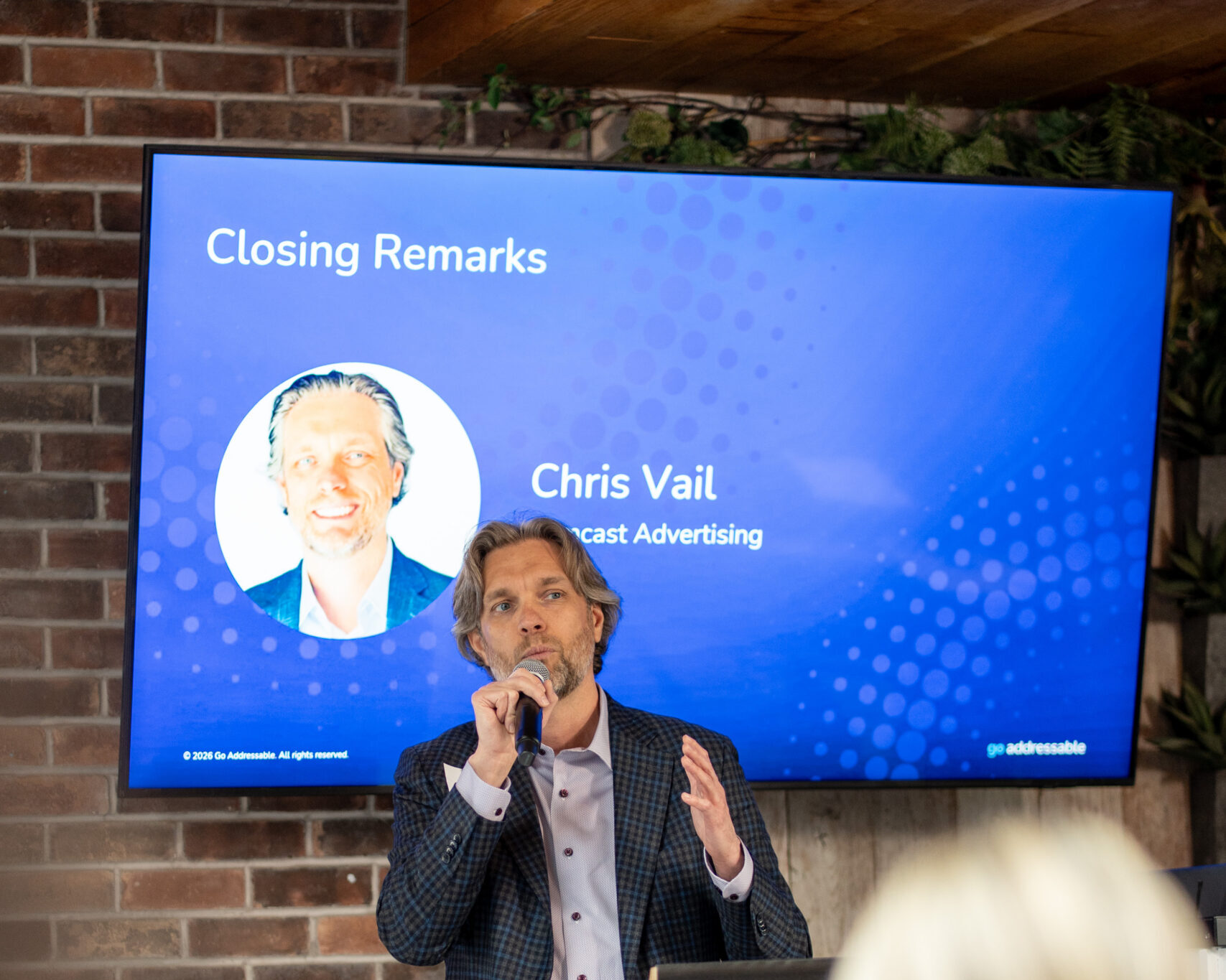
Speaker: Chris Vail, Comcast Advertising
Chris Vail brought the event to a close by summarizing the day’s core themes with conviction. He noted that convergence is a catalyst for innovation and increased effectiveness, and we must prepare for and embrace the pace of AI using authenticated, deterministic audiences. “The industry is no longer just talking about the future of television. We are actively building it.”
“Outcomes are the ones that really matter,” Vail concluded. “Reach and frequency are how we get there, but it is outcomes that matter to advertisers and to business. We must solidify the benefits and need of scaled addressable and deterministic identity.”
He reiterated that Go Addressable will continue to lead the industry under its three strategic pillars: simplify, socialize, and scale. To simplify the ecosystem, the organization is working to establish universal execution standards and is developing a converged video planning simulator to make addressable as easy to execute as any digital buy. Vail encouraged attendees to share the newly launched Addressable Master course with their teams, noting that the free certification program is a vital tool for driving widespread industry adoption.
Key Takeaway
The addressable era has arrived. By establishing universal standards and accelerating educational certification, the industry is poised to deliver unprecedented accountability and speed. The brands and agencies that commit to addressable TV advertising, its use of deterministic identity, AI, and outcomes now will be the ones with the biggest advantage heading into 2027.
Go Addressable: Looking Forward to the Rest of 2026
The third annual Go Addressable TV Upfront Brunch proved that the momentum behind deterministic identity and addressable advertising is stronger than ever. As the industry moves deeper into 2026, Go Addressable is committed to helping marketers navigate this changing landscape through continued education, robust research, and cross-industry collaboration.
Key initiatives to watch for the remainder of the year include:
- Addressable Pro Certification: The third module of the certification series will launch in the second half of 2026, providing advanced training for industry professionals looking to master addressable TV execution. Subscribe and dive into our Essentials and Master courses at goaddressable.substack.com
- Advisory Council Expansion: Go Addressable is expanding its advisory councils to ensure closer alignment between agency buyers and programming partners. This year, we’re expanding our agency council into topic-driven salons discussing some of the most pressing issues facing the industry.
- Ongoing Podcast Series: The remaining episodes of the five-part partnership with Next In Media will debut throughout the year, bringing fresh perspectives from leading industry voices.
- Sixth Annual Leadership Summit: The Go Addressable Summit returns on November 19, 2026. Mark your calendars.
As a Go Addressable member, Ampersand is proud to be part of this growing coalition. The conversations at this year’s TV Upfronts Brunch validated what we hear from our clients every day: addressable is not an add-on. It is an essential strategy.
Thank you to all the members, speakers, and sponsors, including Mastercard, Epsilon, and TransUnion. To stay up to date with the latest research, white papers, and educational resources, visit goaddressable.com/insights.
To watch the full replay of the event or check out the highlights, click here.